Archives
- 2026-04
- 2026-03
- 2026-02
- 2026-01
- 2025-12
- 2025-11
- 2025-10
- 2025-09
- 2025-03
- 2025-02
- 2025-01
- 2024-12
- 2024-11
- 2024-10
- 2024-09
- 2024-08
- 2024-07
- 2024-06
- 2024-05
- 2024-04
- 2024-03
- 2024-02
- 2024-01
- 2023-12
- 2023-11
- 2023-10
- 2023-09
- 2023-08
- 2023-06
- 2023-05
- 2023-04
- 2023-03
- 2023-02
- 2023-01
- 2022-12
- 2022-11
- 2022-10
- 2022-09
- 2022-08
- 2022-07
- 2022-06
- 2022-05
- 2022-04
- 2022-03
- 2022-02
- 2022-01
- 2021-12
- 2021-11
- 2021-10
- 2021-09
- 2021-08
- 2021-07
- 2021-06
- 2021-05
- 2021-04
- 2021-03
- 2021-02
- 2021-01
- 2020-12
- 2020-11
- 2020-10
- 2020-09
- 2020-08
- 2020-07
- 2020-06
- 2020-05
- 2020-04
- 2020-03
- 2020-02
- 2020-01
- 2019-12
- 2019-11
- 2019-10
- 2019-09
- 2019-08
- 2019-07
- 2019-06
- 2019-05
- 2019-04
- 2018-11
- 2018-10
- 2018-07
-
br Concluding Remarks One of the remarkable
2021-11-12
Concluding Remarks One of the remarkable features of Hippo signaling is its sensitivity to the cytoskeleton and mechanical forces. Progress has been made recently in identifying molecular mechanisms by which the cytoskeleton can influence Hippo signaling, but among the many outstanding questions
-
STAR Methods br Acknowledgments We thank C
2021-11-12
STAR★Methods Acknowledgments We thank C. Hong, R. Huang, and Z. Yu at the HHMI Janelia cryo-EM facility for help with microscope operation and data collection. We thank A. Müller, W. Kan, and W. Weis for help with the SEC-MALS analysis and M. Elazar and J. Glenn for the use of equipment. P. Love
-
The fibulins are a newly
2021-11-12
The fibulins are a newly abundantly in the basement membrane of blood vessels. Among them, fibulin-1 is essential for elastin polymerization. Tropoelastin cannot be assembled into mature elastin fibrils without the functional fibulin-1. In adult blood vessels, pronounced fibulin 1 deposition can be
-
Two different genes encode GSK isoforms and that have very
2021-11-11
Two different genes encode GSK-3 isoforms α and β that have very similar catalytic domains but significantly differ in their N- and C-termini. The α and β isoforms split from a common precursor approximately at the emergence of vertebrates, suggesting that at least one of the isoforms took on a new
-
br Recent insights into EAAT structure function aspects The
2021-11-11
Recent insights into EAAT structure/function aspects The EAATs are secondary-active transporters coupling the movement of one Glu with the symport of three Na+ and one proton and the counter-transport of one K+ [3, 4]. The transporters are trimeric assemblies of protomers that function independen
-
Long non coding RNAs lncRNAs are mRNA like
2021-11-11
Long non-coding RNAs (lncRNAs) are mRNA-like transcripts of greater than 200 nucleotides (nt), with little or no protein-coding potential [13,14]. LncRNAs have been suggested to participate in transcription and post-transcription regulation as scaffolds, guides, decoys or repressors, activators, and
-
br A myriad of receptors in WM To complicate the
2021-11-11
A myriad of receptors in WM To complicate the picture, WM glia express numerous non-glutamatergic neurotransmitter receptors, a fact that is often underappreciated when considering pathophysiology. When examined in isolated optic nerve, a central WM tract completely devoid of neuronal synapses, r
-
Glucagon regulates the transition from hepatic glucose utili
2021-11-11
Glucagon regulates the transition from hepatic glucose utilisation in the absorptive state to glucagon production in the post-absorptive state by acute stimulation of glycogenolysis and inhibition of glycolysis [1]. An important component of this response is the phosphorylation of liver PFK2/FBPase2
-
br Materials and methods br Results br
2021-11-11
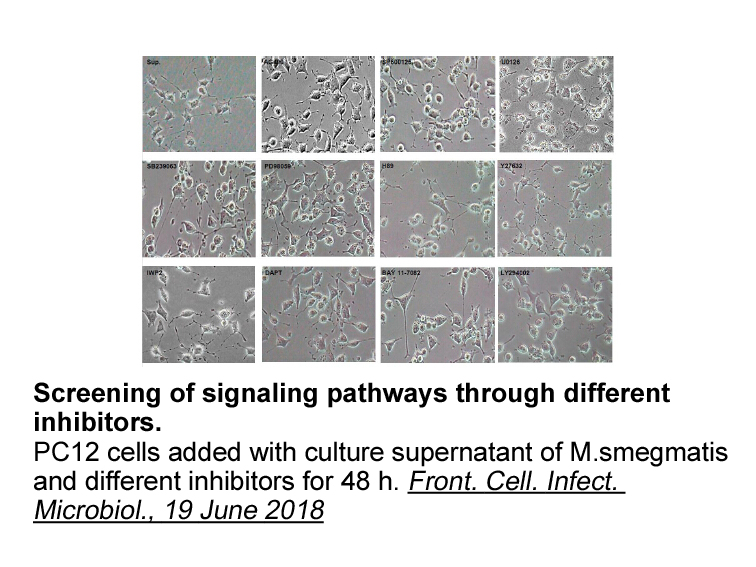
Materials and methods Results Discussion Our liver-specific Gck (−/−) mice and another line of liver-specific mice [13] exhibited impaired glucose tolerance. Furthermore, both knockout mice showed decreased hepatic glycogen content and reduced Pklr and Fas gene GSK2292767 in the liver [11]
-
Glucagon was described as an insulin
2021-11-11

Glucagon was described as an insulin secretagogue as early as 1965 (Samols et al., 1965). Our studies extend these findings by demonstrating that this is a direct effect mediated by distinct receptors in the mouse pancreas. Previous experiments on isolated β bromocriptine mesylate clearly show that
-
Our initial lead optimization started with the modification
2021-11-11
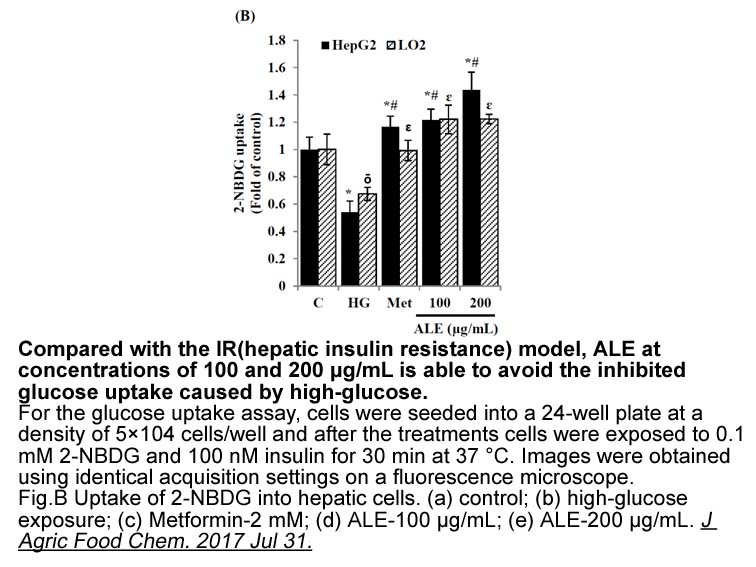
Our initial lead optimization started with the modification of the indole head group as summarized in . Extensive exploration indicated that there was limited tolerance of structural change in this region of the molecule. All of the modifications to the indole moiety, including N-substitution (), l
-
The focused set of additional pyrazole analogs allowed the i
2021-11-11
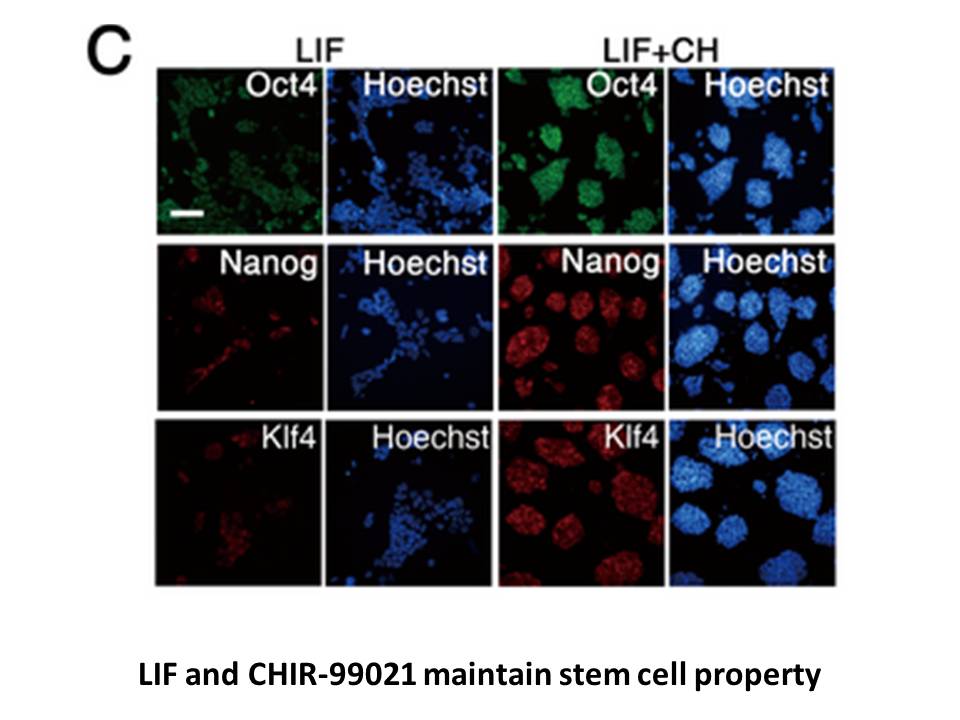
The focused set of additional pyrazole analogs allowed the identification of three additional moderately potent γ-secretase modulators, , and which were subsequently screened in a kinetic solubility assay. Unfortunately, neither the architectural changes in analog nor the integration of trifluoro
-
In conclusion our results show that multiple
2021-11-11
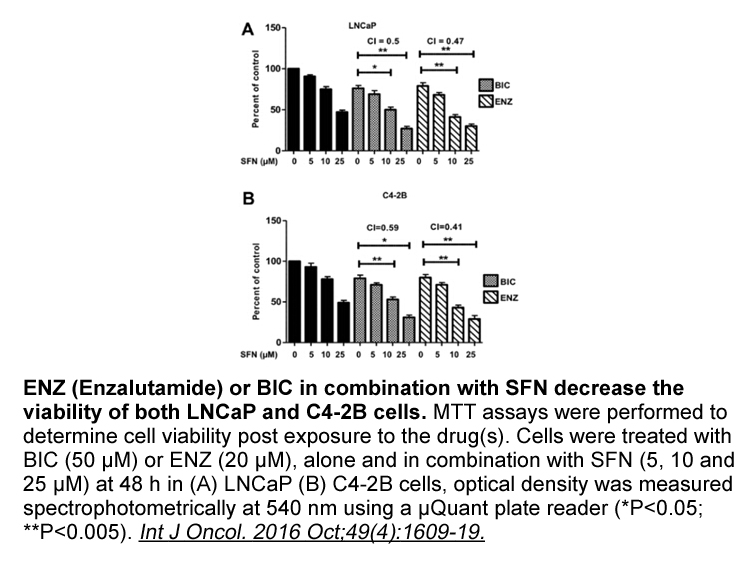
In conclusion, our results show that multiple receptor populations can be expressed when α4, β3 and δ mRNAs are injected into Xenopus oocytes and include β3 homomeric; α4β3; and β3δ receptors. The previously unidentified β3δ can be differentiated pharmacologically from either β3, α4β3 and α4β3δ rece
-
uPAR promotes cell associated proteolysis by binding
2021-11-11
uPAR promotes cell-associated proteolysis by binding to uPA which locally converts plasminogen into active plasmin [10]. Ligand-engaged uPAR also acts as a potent regulator of cell migration and matrix attachment. Being a membrane receptor, uPAR needs to interact with extracellular matrix (ECM) prot
-
Although pharmacological studies from the
2021-11-11
Although pharmacological studies from the end of the 20th century suggested that β1-AR induces a cAMP-dependent apoptosis [30], more recently it has been demonstrated that cAMP, acting through PKA, may be a crucial anti-apoptotic factor in cardiac myocytes [31]. cAMP can also stimulate PI3K, and the
16143 records 548/1077 page Previous Next First page 上5页 546547548549550 下5页 Last page